
Let's Talk About Raw Milk: What the Science Actually Says

If you've spent any time on social media lately, you've probably noticed that everyone seems to have discovered the one thing we're apparently supposed to be eating, avoiding, drinking, or throwing out. Seed oils are toxic. Beef tallow is back. Protein fixes everything. And now, raw milk has become the latest wellness obsession.
If you're already trying to navigate hot flashes, sleep disruption, brain fog, and all the other changes that come with menopause, it's no wonder this gets confusing. When your body suddenly seems to be operating from a completely different owner's manual, you want answers. And when a wellness influencer with glowing skin holds up a glass jar of fresh milk from a farm that sounds straight out of a storybook, it's genuinely appealing.
So when raw milk started showing up in your feeds, promoted by celebrities, certain physicians with large social media followings, and yes, even mentioned favorably by our current Secretary of Health and Human Services, I figured it was time for us to have a real conversation. Not a scary one. Just an honest one. The kind we'd have sitting across from each other in my office.
First, What Are We Even Talking About?
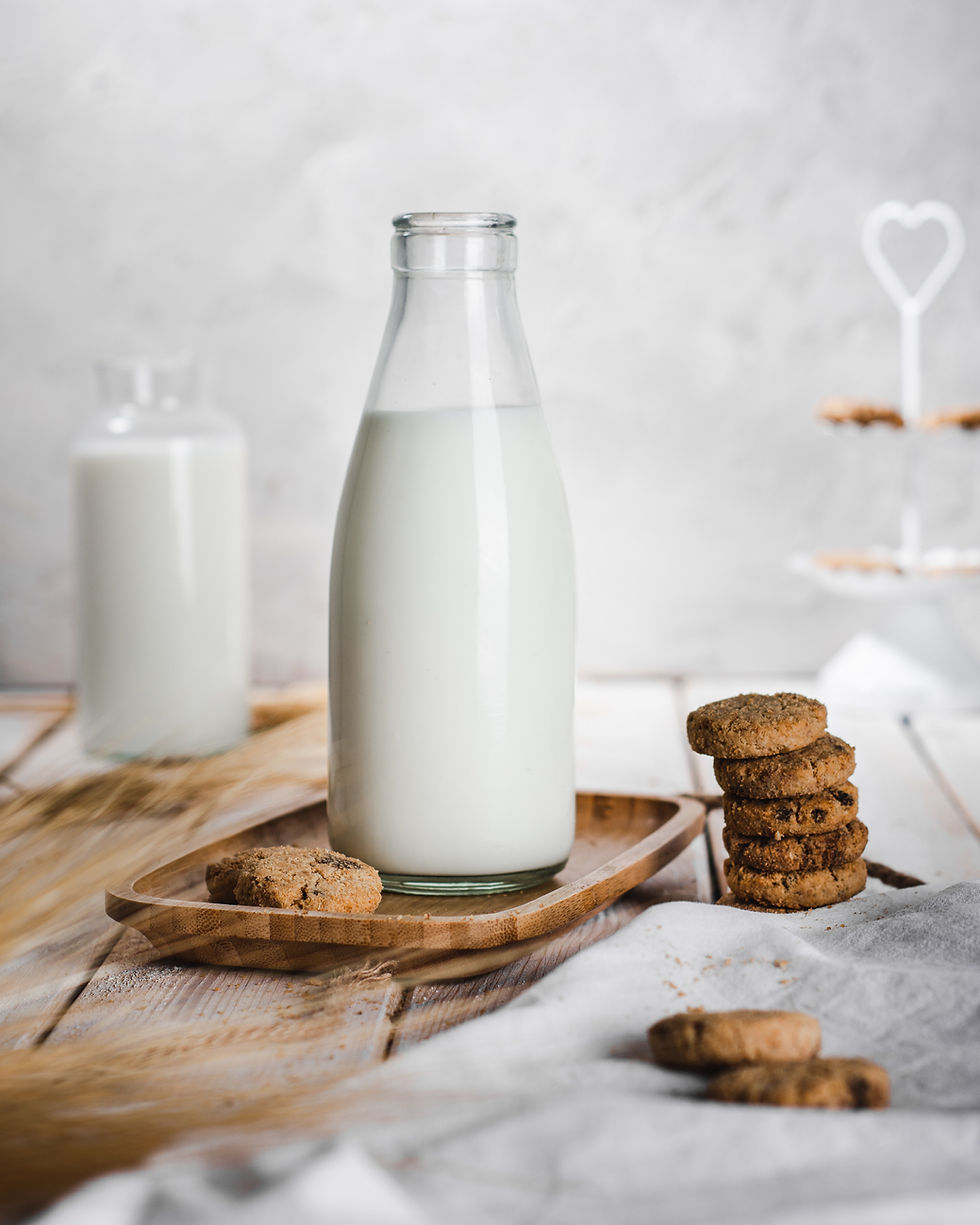
Raw milk is simply milk that has not been pasteurized. Pasteurization, named after Louis Pasteur, is a process that heats milk to a specific temperature for a set period of time in order to kill harmful bacteria. It requires no additives, no chemicals, no preservatives. Just heat, applied for a controlled amount of time.
"But People Drank Raw Milk for Centuries"
They did. And milk-borne illness was widespread.
There is a deeply appealing image embedded in our culture of a farmer heading to the barn at dawn, bringing in fresh milk for the family, just like it was done for generations. Movies and TV have given us that picture hundreds of times, and it looks wholesome and right. What those stories rarely included were the illnesses or the children who didn't make it through the summer.
Before pasteurization became widespread in the early 20th century, raw milk was one of the most dangerous foods a family could consume. Milk-related disease outbreaks accounted for nearly 25 percent of all food- and water-borne outbreaks in the United States in 1938. The introduction of pasteurization laws, city by city and state by state, is considered one of the major public health interventions that contributed to dramatic reductions in infant mortality rates. Within a decade of mandatory pasteurization in New York City, infant mortality fell by more than two thirds.
Pasteurization largely eliminated milk as a vehicle for tuberculosis, typhoid fever, diphtheria, Q fever, and brucellosis, among others. These weren't rare edge cases. They were leading causes of death, and the milk supply was one of the main ways they moved through families and communities.
The romanticized image of the family farm is real and meaningful in a lot of ways. But it is also an image with the disease edited out. The desire to return to something that feels purer and less processed is understandable. The history just doesn't support the idea that the way things were done before was better for anyone's health.
Why Has Raw Milk Become So Popular?
This is worth understanding, because the messengers matter in how we receive information.
Celebrities including Gwyneth Paltrow and lifestyle influencers with millions of followers have spoken publicly about drinking raw milk and credited it with various benefits. Paul Saladino, MD, known as "Carnivore MD," has nearly 3 million Instagram followers and is a prominent advocate. Although trained as a physician, his views on nutrition differ substantially from the mainstream recommendations of nutrition, infectious disease, and public health experts. In May 2025, he sat down with HHS Secretary Robert F. Kennedy Jr. at the White House, and the two were filmed drinking shots of raw milk together. I understand why that image reads as a kind of endorsement. But a compelling photograph is not the same as scientific validity.
The trend also has a strong political dimension, with some groups framing raw milk as a matter of personal freedom and skepticism of federal agencies. That framing is worth noting, because it positions distrust of public health guidance as a virtue. On this topic, that distrust is not well-founded.
What Does Your Grocery Store Milk Actually Go Through?
Most people have no idea how carefully protected the commercial milk supply already is. The answer is: very carefully, and by law.
The federal framework governing milk safety is called the Grade "A" Pasteurized Milk Ordinance, known as the PMO. It has been in place since 1924 and is revised every two years by a national conference of dairy industry representatives, government officials, and academics from all 50 states. The PMO is one of the main reasons milk-related disease outbreaks have fallen from nearly 25 percent of all food- and water-borne outbreaks in 1938 to less than 1 percent today.
Here is a simplified version of what your milk goes through before it reaches you.
Within two hours of milking, all milk must be cooled to 45 degrees Fahrenheit and refrigerated. When a tanker driver arrives at the farm, they take samples from the bulk tank for later testing. At the processing facility, every load is tested for antibiotic residues, and any load that tests positive is rejected entirely and removed from the food supply. Tankers are also tested for bacterial counts and for added water, which would be illegal adulteration. Then comes pasteurization, followed by additional inspections and testing by the FDA and state agencies. All of that is the minimum required. Many processors go further.
The milk in your refrigerator right now has been through more testing and inspection than almost any other food in your kitchen.
Now, the Claims
So it makes sense that when someone tells you there's a purer, more nutritious version of milk out there, it feels worth taking seriously. Let's look at what the evidence actually shows.
"Raw milk is more nutritious."
This one does not hold up. A 2011 systematic review and meta-analysis of 40 studies found that pasteurization produces only a nominal effect on nutritional value. Some vitamin levels are modestly reduced, but those vitamins are found in relatively low concentrations in milk to begin with, and most of your intake of those nutrients comes from other foods anyway. Minerals like calcium and phosphorus, which are the main nutritional reason many of us drink milk in the first place, are completely unchanged by pasteurization. The calcium that matters for your bones during menopause is just as available in your regular grocery store milk.
"Raw milk has beneficial probiotics."
Pasteurization does kill bacteria, including potentially beneficial ones. But the majority of bacteria found in raw milk are not probiotic. To be classified as probiotic, bacteria need to be non-pathogenic and beneficial. Most of what naturally lives in raw milk does not meet that standard, because it originates from the animal's udder, the surrounding environment, and milking equipment. The bacteria you actually want for gut health come from fermented products like yogurt and kefir, and both are made using pasteurized milk. The live cultures are added after pasteurization, where they can thrive without competing with harmful bacteria. If gut health is your goal, yogurt and kefir give you far more benefit with far less risk.
"Raw milk helps with lactose intolerance."
Milk contains lactose, and digesting it requires an enzyme called lactase. The claim here is that beneficial bacteria in raw milk produce lactase, making it easier to digest. But all milk, raw or pasteurized, contains lactose and not the enzyme lactase needed to break it down. There is no indigenous lactase in milk. If you are lactose intolerant, raw milk will cause you the same trouble as any other milk.
"It cured my [fill in the blank]."
Some raw milk producers have made sweeping health claims over the years, including that their products treat or prevent diabetes, ear infections, allergies, eczema, arthritis, and asthma. The FDA has issued warning letters to multiple farms over exactly these kinds of claims, and the Department of Justice has pursued legal action against producers who continue making them. A 2009 systematic review concluded that scientific evidence to substantiate health benefit claims for raw milk is "lacking or does not exist." What you see online are testimonials, which are anecdote, not evidence.
"But What About My Trusted Farm?"
I hear this one often. "I get it from a small farm I know personally." "The farmer tests it himself." "They're really careful." I genuinely believe most of these farmers are hardworking people who care about their animals and their customers. But even the most careful farm cannot guarantee that raw milk is pathogen-free.
And what if I drink it right away, straight from the cow?
This is a reasonable question, and the answer is counterintuitive. The pathogens in raw milk don't develop because the milk sits around. They are present from the start, originating from the animal's udder tissues, the surrounding environment including soil, water, and manure, and milking equipment. Milk can be particularly hospitable to bacterial growth immediately after milking, precisely because it is still at the animal's body temperature. Freshness does not make it safer.
Even with careful farms and fresh milk, contamination can happen at any point. An infected cow may shed bacteria before showing any signs of illness. A negative test on Tuesday does not make Wednesday's batch safe, because testing is done on samples, not on every drop. Dairy scientists who study this note that even well-run farms encounter moments where something goes wrong during milking, and no amount of care can guarantee a completely clean result every time.
The FDA has been direct on this point: even rigorous on-farm safety practices can reduce the probability of contamination, but they cannot ensure that raw milk is pathogen-free.
One more thing to know: there is no such thing as an "FDA-approved" raw milk farm. The FDA does not approve, certify, or endorse raw milk producers. If a farm is making that claim, it is not accurate. A state permit to sell raw milk tells you the farm met the legal minimum threshold to operate in that state. It does not tell you the milk is safe. And notably, some of the most prominent commercial raw milk producers in the country, marketing themselves as premium and safety-conscious, have been linked to repeated outbreaks and faced federal legal action.
To put the risk in concrete terms, about 4.4% of U.S. adults say they drank raw milk at least once in the past year. That may sound like a small number, but raw milk still accounts for a surprisingly large share of dairy-related foodborne illness. In one peer-reviewed analysis published in Emerging Infectious Diseases, unpasteurized dairy products were estimated to cause 840 times more illnesses and 45 times more hospitalizations than pasteurized dairy products. That does not mean every glass of raw milk will make someone sick. Most will not. But when illness does occur, raw milk is disproportionately represented, and the gap between the two is striking.
One Newer Concern Deserves Mention: Bird Flu
H5N1 avian influenza spread widely through U.S. dairy cattle herds beginning in late 2023. The peak of that outbreak was in 2024, and the situation has since improved, with most affected states getting the virus under control. But it has not gone away. New confirmed cases in dairy herds appeared in Idaho, Texas, and Utah as recently as spring 2026, a reminder that "unaffected" status can change quickly and without warning.
Research published in the peer-reviewed journal Nature Medicine in October 2025 found that H5N1 virus remained infectious in raw milk cheeses through the full 60-day aging period that federal law has long assumed makes cheese safe. Separate research found the virus survived in refrigerated raw milk for more than a week. In the commercial pasteurized milk supply, no viable virus has been detected. Pasteurization has been shown to inactivate H5N1 under commercial pasteurization conditions. Raw milk does not provide that assurance.
H5N1 is not the primary reason to avoid raw milk. The primary reasons have existed for more than a century. But it is a meaningful additional one, and it is current.
What About RFK Jr.?
Secretary Kennedy has been a public advocate for raw milk. Before taking office, he wrote that he intended to end what he called the FDA's "war on public health" when it came to raw milk. Those changes have not materialized. He has not relaxed federal rules, reversed official warnings, or lifted the interstate ban on raw milk sales that has been in place since 1987. The FDA's position that raw milk puts all consumers at risk remains unchanged.
Someone holding a cabinet position and expressing a personal preference is not the same as that preference being supported by evidence. On this particular question, it is not.
The Bottom Line
The scientific consensus on raw milk is clear. Every major U.S. public health agency, including the CDC, the FDA, and the American Academy of Pediatrics, agrees that raw milk carries real risks and that pasteurized milk offers the same nutritional benefits without them. The claims being made about benefits are not backed by rigorous evidence. The risks are well documented and have been for over a century.
You are going through a significant transition. Your body has real needs right now, including protein, calcium, and gut support. All of those needs can be met with foods that do not carry the risk of Salmonella, E. coli, Listeria, Campylobacter, or H5N1. Regular pasteurized dairy, yogurt, kefir, and aged cheeses give you the nutrition without the gamble.
The appeal of something natural and unprocessed is real, and I understand it. But pasteurization is not something that was done to your food without good reason. It is one of the most well-documented public health successes of the last century, built on lessons learned when people were actually dying from what Pa brought in from the barn.
You deserve real information, not trending wellness narratives. And my job is to make sure you have it.
As always, bring your questions to your next appointment. Every patient is different, and that's what I'm here for.
This post reflects current evidence and regulatory context as of June 2026.
Comments